Table of contents
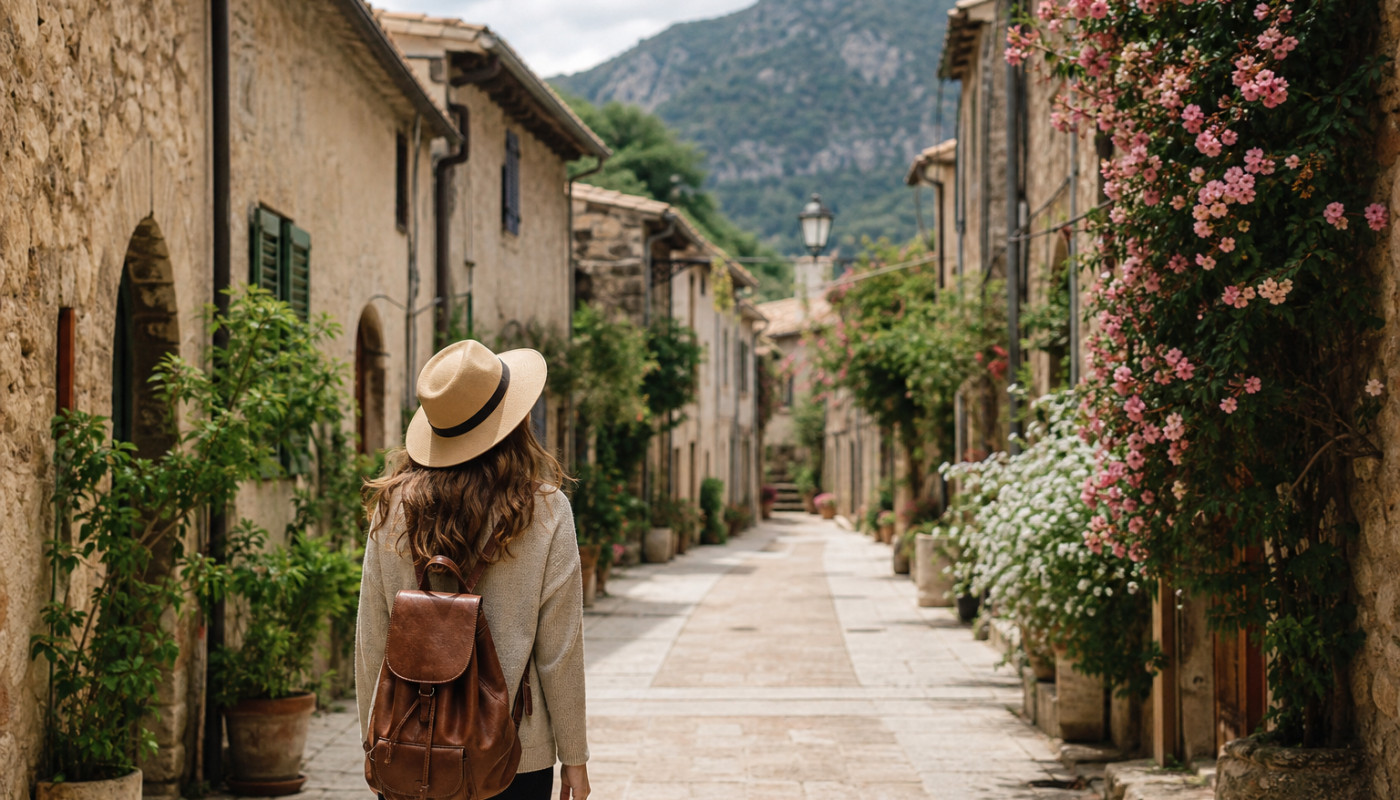
Overbooked capitals and overfiltered hotspots are losing their shine, and the backlash is measurable: according to the European Travel Commission, 77% of Europeans plan to take at least one trip between October 2024 and March 2025, with a clear tilt toward “quieter” destinations and shoulder seasons. Hidden towns, long treated as stopovers, are stepping into the main role, offering cleaner sightlines, shorter queues, and the kind of local texture that mass tourism tends to sand down.
Small streets, big shifts in travel
Who decided the same five cities were mandatory? The travel industry did, partly, by building easy narratives around iconic skylines, and partly because infrastructure and marketing budgets naturally favored places already on the map. Yet the data is moving in the opposite direction, and it is not just anecdotal fatigue. The European Travel Commission’s latest monitoring shows demand concentrating in the shoulder season, and it is hard to separate that from rising heat risks and crowd anxiety; southern Europe has faced repeated summer heat waves in recent years, and travelers are adapting by changing when they go, and increasingly where they go.
Hidden towns benefit from this recalibration because they match what people say they want, and what they are willing to pay for. Booking.com’s 2024 Travel Predictions found that 52% of travelers want to visit somewhere “less crowded,” and 53% say they want to go off the beaten path, a pairing that explains why small places with strong identities, whether a river town with a single market street or a hillside community organized around craft and agriculture, suddenly look like the smart choice rather than the compromise. The effect is also structural: when visitors spread out, transport networks and regional airports gain relevance, and rural accommodation stock, often family-run, can compete on experience rather than scale.
There is also a subtler change at work, and it is cultural as much as logistical. Big-city travel can become a checklist, especially under time pressure, whereas a smaller destination forces a different pace, and in doing so it opens space for interactions that do not fit neatly into a reel. You can actually talk to the winemaker, sit through the second cup of tea, ask why the local church bell rings at odd hours, and leave with a story that is not prepackaged. In an era when “authentic” is overused, hidden towns often deliver it accidentally, simply because they are still living places, not visitor stages.
What you gain when crowds disappear
Silence is underrated, and it changes everything. In a hidden town, the first gain is time, because you are not spending it in lines, in traffic, or in the cognitive overload of tourist density. That matters more than it sounds: the OECD has repeatedly highlighted how tourism pressure can strain local services, from waste collection to water demand, and while the OECD’s work focuses on system-level impacts, the traveler experiences the same strain as friction, and as fatigue. Smaller places can be gentler, and the gentleness is not just aesthetic; it becomes practical, especially for short breaks where every hour counts.
The second gain is price stability, not always cheaper, but often fairer relative to what you get. Overtouristed centers tend to produce a distortion: accommodation prices surge fastest where supply is rigid, and where demand is hyperconcentrated, while restaurants and attractions can drift toward a “visitor menu” model. In hidden towns, the market is different, and the value proposition shifts toward inclusion, think breakfast that is actually homemade, a museum staffed by volunteers who know the archive, or a guide who can improvise rather than recite. Even when nightly rates are comparable, the experience can feel less transactional, and that is increasingly what travelers say they are buying.
The third gain is environmental, and it is not a simplistic “small equals sustainable” claim. The carbon footprint of a trip is still heavily driven by transport mode, particularly aviation, but destination choice influences what happens once you arrive, and how long you stay. Hidden towns often encourage slower travel: longer stays, fewer internal transfers, and more walking, cycling, or local public transport. That matters because a trip built around three major hubs in five days is almost designed to generate extra emissions through constant movement. A smaller base, used well, can support the kind of low-friction itinerary that keeps your footprint from ballooning after the flight.
How to find places before they’re “found”
Chasing secrecy is a trap. The goal is not to “discover” a place like it was uninhabited, but to choose destinations where tourism is present, yet not overpowering, and where your spending supports local life rather than displacing it. The most reliable method is to follow functional geography instead of hype: look for towns that sit near, but not inside, headline destinations, especially those connected by regional rail or reliable bus lines. University towns, market towns, and administrative centers often have year-round services, which means you can travel outside peak season without finding half the place shuttered.
Digital tools can help if you use them with restraint. Instead of searching “hidden gem,” which now mostly returns optimized content loops, look for municipal cultural calendars, regional park visitor updates, and transport timetables, and cross-check with satellite views to understand walkability and terrain. It is also worth reading local-language press, because it reveals what the town considers important, a festival, a flood risk, a housing debate, and you will travel with better context. For trip planning in northern Thailand, for example, practical orientation on routes, timings, and local pacing can be easier to grasp through a dedicated resource such as https://www.chiangmai-trip.com, which consolidates on-the-ground basics without forcing your itinerary into a one-size-fits-all template.
Timing remains the quiet superpower. Shoulder seasons are not just about cheaper rooms; they change the social texture of a place, because you are less likely to encounter businesses running at maximum throughput, and more likely to meet residents who are not exhausted by the daily surge. The European Travel Commission’s findings about strong intention to travel in October to March underline a broader shift: travelers are learning to treat weather as a risk variable, and crowds as a cost, and hidden towns thrive under that logic. The key is to do the homework, check local event spikes, and arrive when the town is itself, not when it is performing for an audience.
The etiquette that keeps towns livable
Want the welcome to last? Then act like a guest, not a consumer. Hidden towns are often more sensitive to tourism’s side effects because the margin for disruption is smaller, and what looks like a small behavioral slip in a metropolis, noise at midnight, drone use over private gardens, parking on narrow lanes, can be a real intrusion in a place where everyone knows everyone. Basic etiquette is not performative; it is operational. Keep your voice down at night, ask before photographing people, and remember that “public space” can still feel intimate in a small community.
Spending choices matter, too, and not only in the moral sense. In many small destinations, the difference between a living high street and a hollowed-out one is whether money circulates locally, so prioritize independent businesses, buy regionally made goods, and treat markets as more than an Instagram backdrop. If you are booking experiences, favor small-group guides with transparent pricing, and avoid wildlife or “cultural” shows that rely on exploitation. The UN World Tourism Organization has long emphasized that tourism can support local development when it is well-managed, but the reverse is also true: unmanaged demand can inflate housing pressures and push residents out, a dynamic visible in multiple European and global destinations.
Finally, respect the limits of infrastructure. Water, waste, and mobility are the three stress points that hidden towns rarely have the capacity to scale overnight. Travel with a refillable bottle, take your trash seriously, and choose accommodations that state clear sustainability practices rather than vague slogans. If you drive, park where you are told, and consider leaving the car parked for the day, because a town built before modern traffic cannot be retrofitted around your rental. Hidden towns do not need to become famous to be meaningful; they need visitors who understand that the privilege of quiet comes with responsibilities.
Plan it well, and keep it simple
Book early for small inventories, especially in peak weekends and festival periods, because hidden towns have fewer rooms, and “last minute” often means “nowhere.” Build a realistic budget that includes local transport and at least one paid cultural visit, museum, heritage site, or guided walk, because those tickets frequently fund preservation.
Similar
What Your Itinerary Isn't Telling You About Authentic Experiences

Why Every Itinerary Should Embrace The Art Of Unplanned Detours

Rethinking Classic Tours: The Surprising Value Of Flexible Itineraries

Getting Lost On Purpose: The Hidden Advantages Of Unplanned Travel Days
